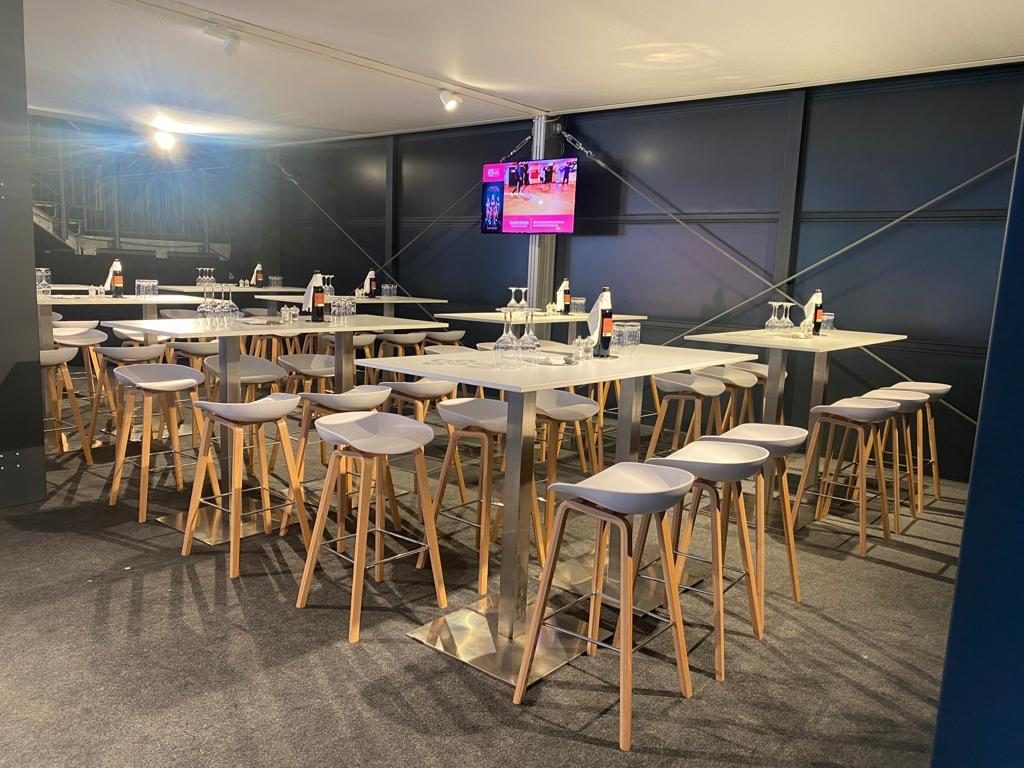
A guest may forget the exact agenda of a conference. They are far less likely to forget how it felt to enter the room, find their way through it, meet the right people, and leave with a clear impression of the brand behind it. That is the business value of event branding: it turns a gathering into a deliberate brand experience rather than a well-organized date on the calendar.
For a product launch, trade show appearance, leadership summit, gala, or international delegation, the stakes are high. Every visible and invisible detail signals something about the organization: confidence or uncertainty, relevance or routine, care or compromise. Strong branding brings those signals into alignment. It gives guests a reason to remember, talk about, and act on the experience.
Event branding is often reduced to a logo on a backdrop, a matching presentation template, and color-coordinated signage. Those elements matter, but they are only the surface. A credible event identity begins with a strategic question: what should this audience understand, feel, or do differently after being here?
The answer depends on the occasion. A sales conference may need to create momentum around a new direction. A trade show booth may need to make a complex offer immediately understandable in a crowded hall. An employer event may be designed to strengthen belonging and make culture visible. For international companies hosting in Germany, Austria, or Switzerland, the event also needs to translate a global brand into a local context without losing its character.
This strategic foundation determines the creative language. It shapes the story, spatial design, program rhythm, hospitality, content formats, and follow-up communication. When the purpose is clear, an elegant design does more than look polished. It helps people orient themselves and gives each interaction a meaningful place in the larger experience.
A brand guideline is usually made for screens and printed materials. An event asks more of it. It must work in motion, in space, and in human interaction.
In motion, guests encounter a sequence rather than a single message. The invitation creates anticipation. Arrival either confirms that promise or weakens it. The opening, breaks, networking moments, and closing each contribute to the emotional arc. A strong concept considers this journey from the first save-the-date through post-event communication.
In space, branding has to serve practical needs. Signage should be recognizable without becoming visual noise. Stage design needs to support the speakers and the camera image. Furniture, materials, lighting, florals, and hospitality zones should feel coherent while still allowing people to move, converse, and work comfortably. At a trade show, a beautiful booth that hides the product or makes conversations awkward is not a successful brand space.
In human interaction, the brand becomes behavior. Hosts, speakers, catering teams, and sales representatives all contribute to the guest experience. Their briefing should cover more than timing and procedures. They need to understand the tone of the event, the priorities for guests, and how the brand wants to be experienced: precise, welcoming, progressive, discreet, energetic, or refined.
The most effective projects make creative choices in a disciplined order. Starting with decoration is tempting because it produces quick visual results. Starting with audience and objectives produces better decisions later, especially when budgets, venues, and stakeholder expectations become more complex.
Most business events serve several audiences at once: customers, employees, partners, executives, media, or prospective talent. They do not all need the same message. The priority is to identify the moment that matters most for each group.
At an industry reception, that may be the first conversation between a sales team and a prospect. At a leadership meeting, it may be the reveal of a strategic ambition. At a congress, it may be a quiet lounge where participants can have the conversations that never happen in the auditorium. Event branding should actively support these moments instead of treating networking as an unplanned gap between agenda items.
This also helps define success. Attendance alone is rarely enough. Depending on the format, useful measures can include qualified meetings, lead quality, content engagement, media assets created, employee sentiment, partner conversations, or follow-up appointments. The measurement model should influence the experience design from the outset.
Memorable events usually have a clear central idea. It might be rooted in a campaign message, a product characteristic, a future vision, or the host city itself. The idea does not need to be complicated. It needs to be distinctive enough to guide choices when dozens of details are in motion.
For example, an innovation-focused event may use transparency, modularity, and interaction as recurring principles across the stage, registration, content, and networking areas. A premium client event may emphasize craftsmanship, considered hospitality, and calm spatial transitions. The point is not to repeat a slogan everywhere. It is to create a recognizable logic that guests can feel.
Restraint is part of the craft. Oversized logos, too many competing colors, and decorative elements without purpose can make an event feel promotional rather than premium. In high-value B2B settings, confidence is often expressed through clarity: fewer materials, better finishes, purposeful lighting, and messaging that respects the audience's time.
A stage is a focal point, but it is not the entire event. The most persuasive brand experiences are built through a sequence of touchpoints that work together. These include the registration journey, welcome communication, wayfinding, name badges, presentation design, food and beverage, networking formats, photo moments, and departure materials.
Not every touchpoint requires a custom production. The right level of investment depends on guest volume, event duration, brand maturity, and commercial purpose. A 60-person executive dinner can make a strong impression through exceptional table styling, a thoughtfully selected location, and highly personal hosting. A large conference may need a scalable system for signage, digital content, and guest navigation.
Consistency should never become monotony. A guest should recognize the same brand world throughout the experience while encountering different reasons to engage with it. Variation in pace, texture, light, and participation keeps the format alive.
For organizations planning in unfamiliar markets, event branding can fail not because the concept is weak, but because local delivery is underestimated. Venue regulations, technical standards, build times, transport routes, labor coordination, supplier availability, language, and permitting can all influence what is possible.
This is particularly relevant for international exhibitors and corporate teams producing events in the DACH region. A global identity may require local adaptation for venue conditions and cultural expectations. That does not mean diluting the brand. It means protecting its quality under real-world conditions.
A local full-service partner can coordinate event and trade show management, booth construction, equipment, furnishings, catering, host services, and production planning through one accountable structure. That central coordination is not merely operational convenience. It prevents fragmented decisions that can compromise the final brand experience.
WE ARE POV approaches this work as a combination of creative direction and precise execution. Whether the assignment is a compact business format or a large-scale international production, the objective remains the same: translate a brand into an experience that feels intentional from the first guest arrival to the final follow-up.
Sustainability should not appear as a separate, decorative layer added after the concept is approved. Guests and stakeholders increasingly notice the gap between a company's stated values and an event built on unnecessary waste, short-lived materials, or inefficient logistics.
A more responsible approach can include reusable modular structures, rental furniture, locally sourced production, consolidated transport, digital alternatives where they improve the guest experience, and materials selected for reuse or responsible disposal. The right choices depend on the brief. A fully digital event is not automatically more sustainable, and a physical installation is not automatically wasteful.
The strongest sustainable solutions are integrated early. They can reduce unnecessary production while improving design quality, because the team is forced to make more deliberate choices. A material palette with fewer, better elements often feels more elegant than an overbuilt environment.
The event itself is finite, but its value should not be. Capture the right visual assets, key ideas, guest reactions, and conversation points while the experience is still active. Then use them with purpose: sales follow-up, employer communication, social content, partner outreach, or internal momentum.
More importantly, review what guests actually did. Where did they stay longest? Which session created discussion? What questions did the sales team hear repeatedly? What made the experience feel effortless, and where did friction appear? These observations are the raw material for a stronger next event.
A well-branded event is not simply seen. It gives people confidence in the organization that brought them together - and gives them a meaningful reason to continue the conversation.
Schicken Sie uns Termin, Ort und die erwartete Gästezahl – Sie bekommen eine Aufstellung mit Mengen und Preisen je Bereich zurück, aus der sich direkt bestellen lässt.
Anfrage starten
